















2026-09-23


If you own a fishing kayak, inflatable boat or fishing boat, you are probably familiar with trolling motors.
Many people are stuck choosing between lead acid and lithium iron phosphate batteries. Some say lithium batteries are lighter; others argue they cost too much.
We break down this question with real test data.
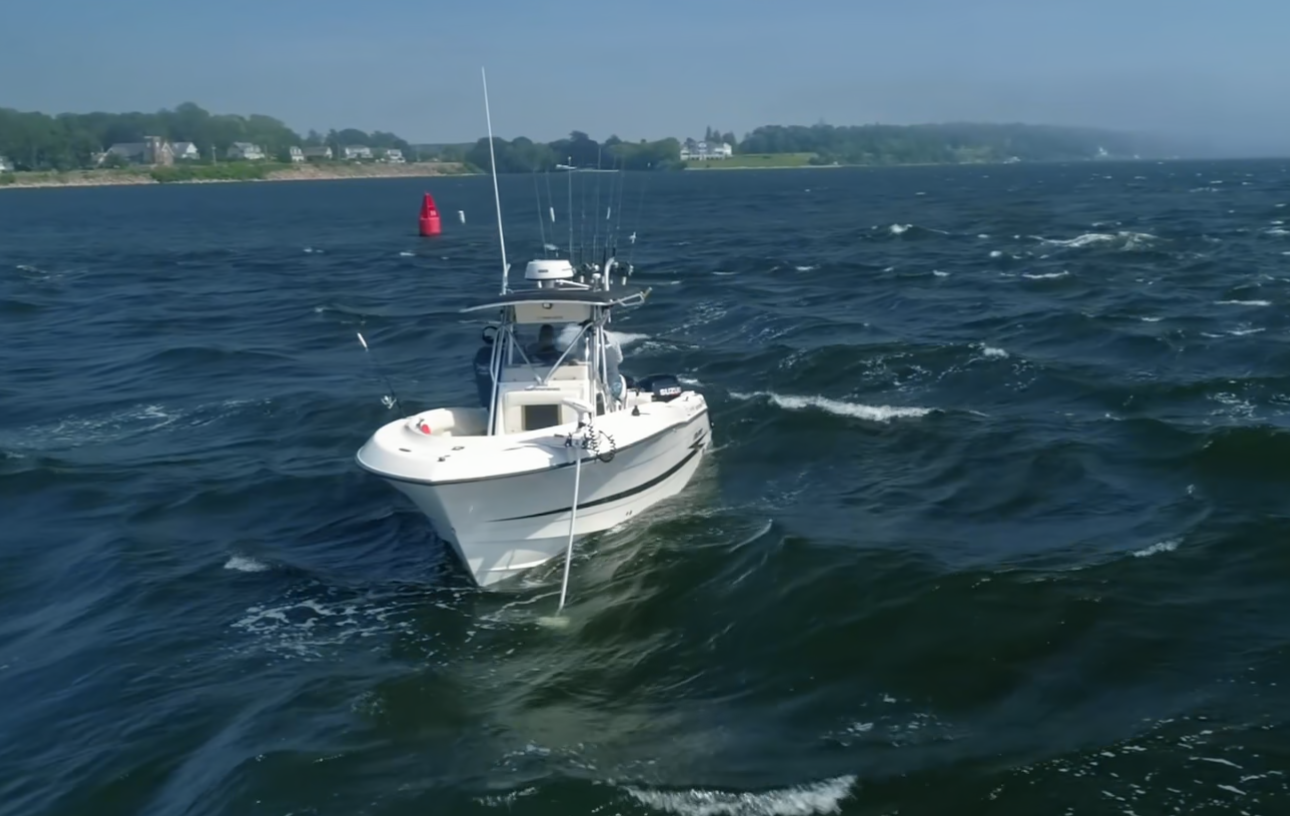
We tested two mainstream 100AH class battery models on the market. VARTA 100Ah AGM lead acid battery, retail price 150USD; LILEAD D105 105Ah LiFePO₄ battery, retail price 325USD. We discharged them at 30A and 60A, simulating medium speed and full speed working conditions of trolling motors.
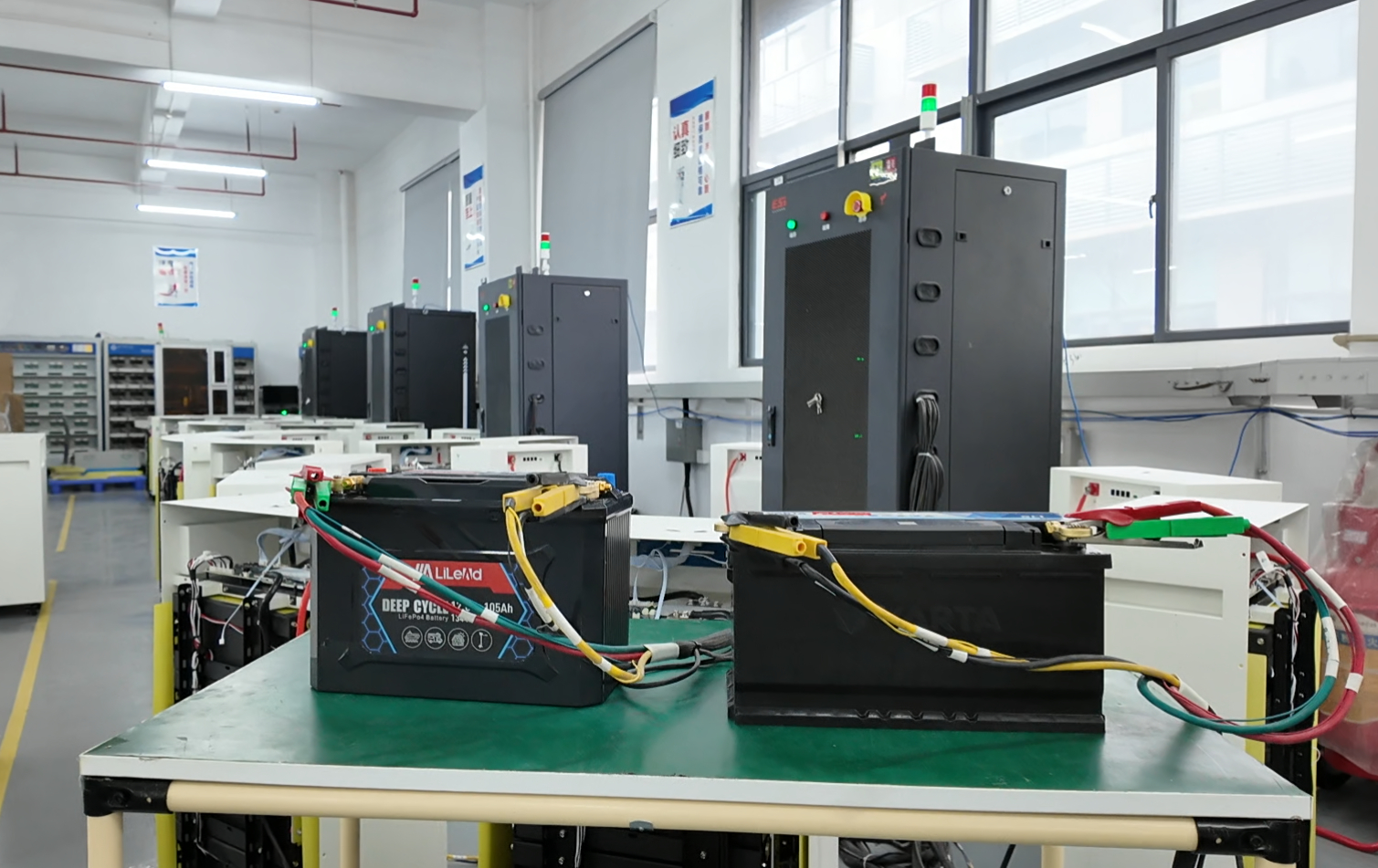
Look at our measured test data.
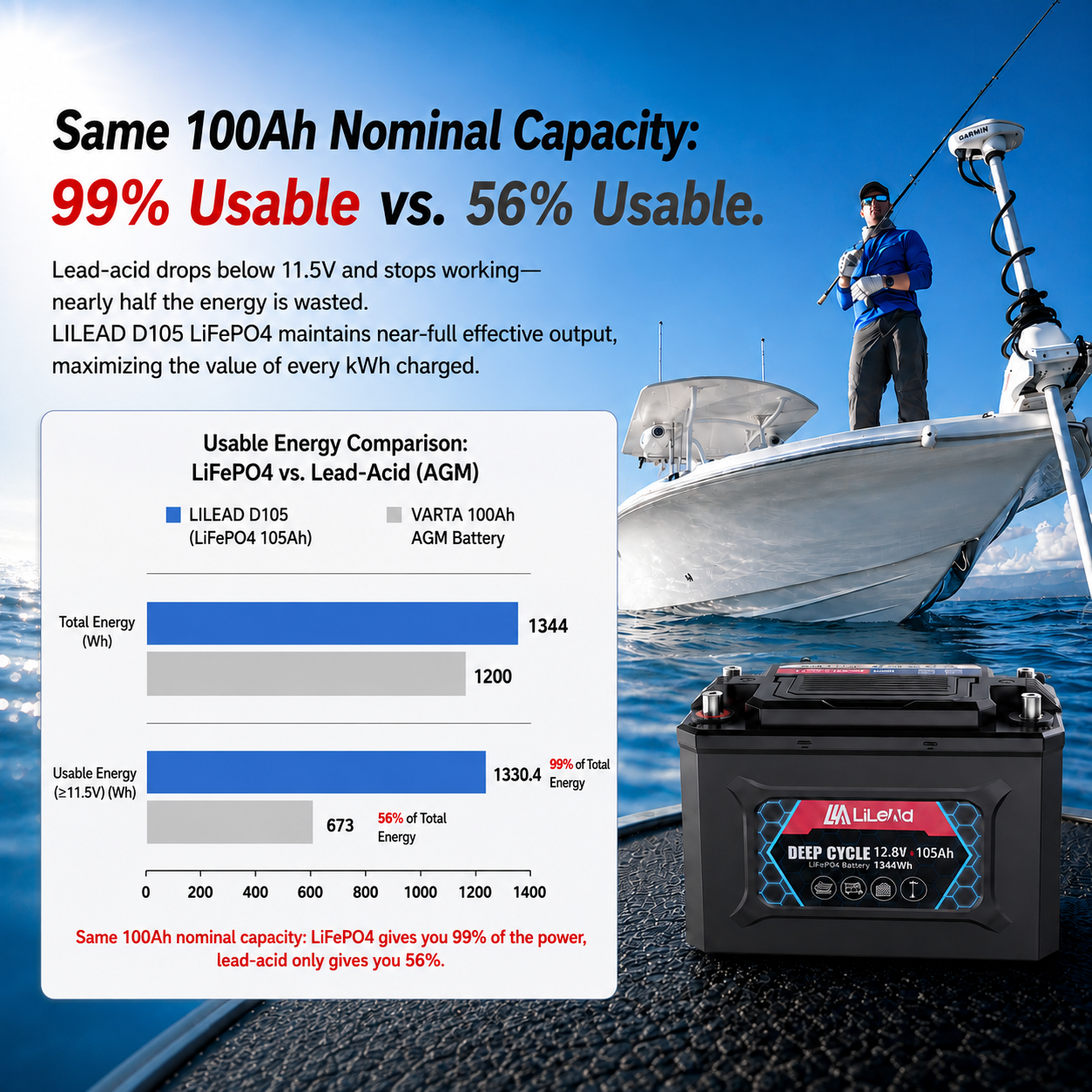
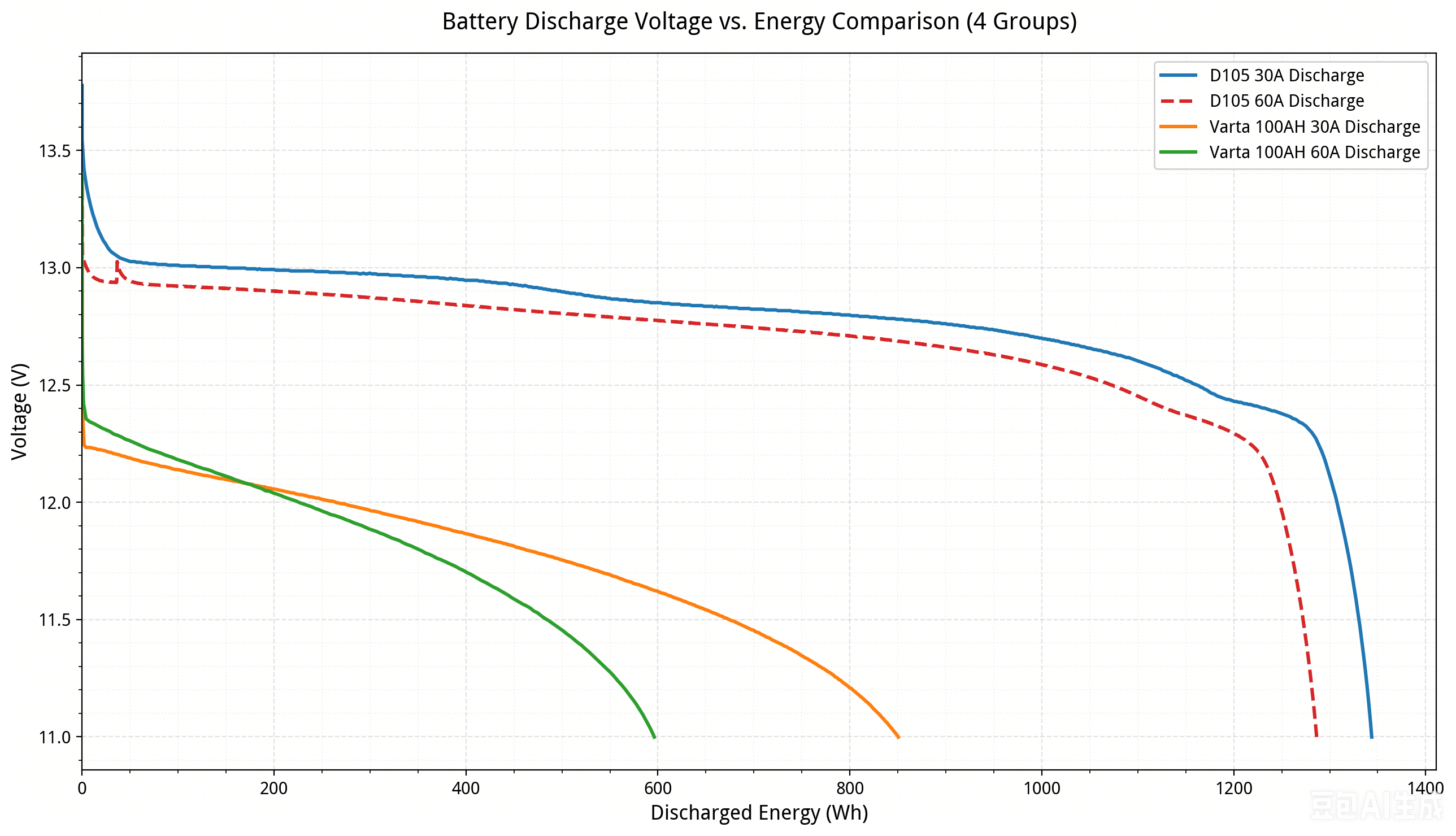
At 30 A discharge: The LILEAD D105 lithium battery delivers 1330 Wh above 11.5 V, accounting for 99 % of its total energy. The AGM lead acid only outputs 673 Wh above 11.5 V, which is merely 56 % of its total energy.That means nearly half the lead acid battery’s stored energy sits in that “power is there but no thrust” voltage range below 11.5 V.
Energy numbers are abstract.
Let’s convert them into running time, which is far easier to understand.
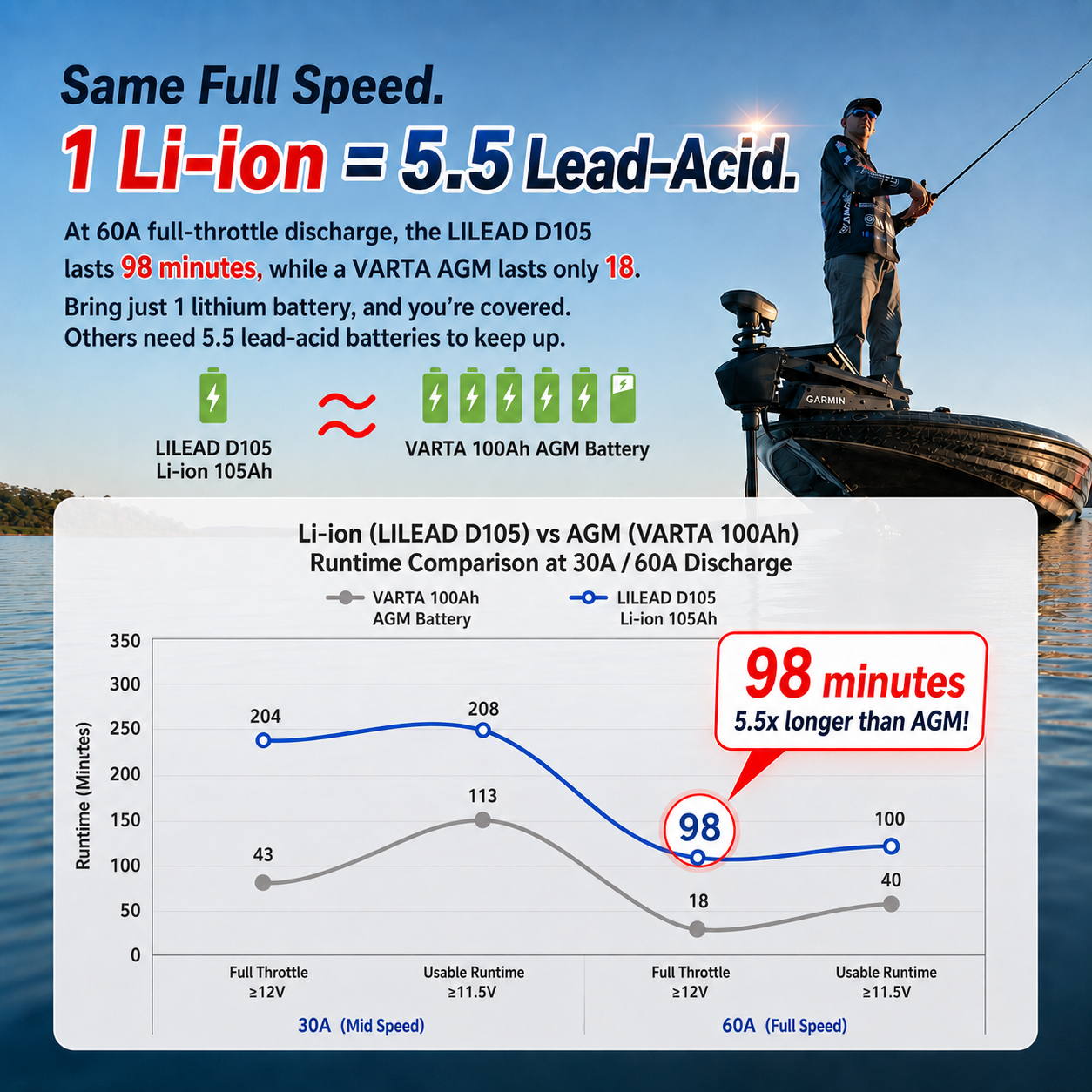
Medium speed mode (30 A discharge): LILEAD D105 full thrust runtime: 204 minutes. VARTA AGM lead acid full thrust runtime: only 43 minutes. The lithium battery runs 4.7 × longer on full thrust.
Usable runtime (time above 11.5 V): LILEAD D105: 208 min; VARTA AGM: 113 min. Usable runtime is 1.8 × longer for the lithium battery.
Full speed mode (60 A discharge):
LILEAD D105 full thrust runtime: 98 minutes; VARTA AGM full thrust runtime: only 18 minutes. Full thrust runtime is 5.5 × longer for the lithium battery. Usable runtime (above 11.5 V): LILEAD D105: 100 min; VARTA AGM: 40 min. Usable runtime reaches 2.5 × of the AGM battery.
You can visually see this massive real world performance gap from our measured discharge voltage vs energy curve graph.
let’s calculate long term cost.
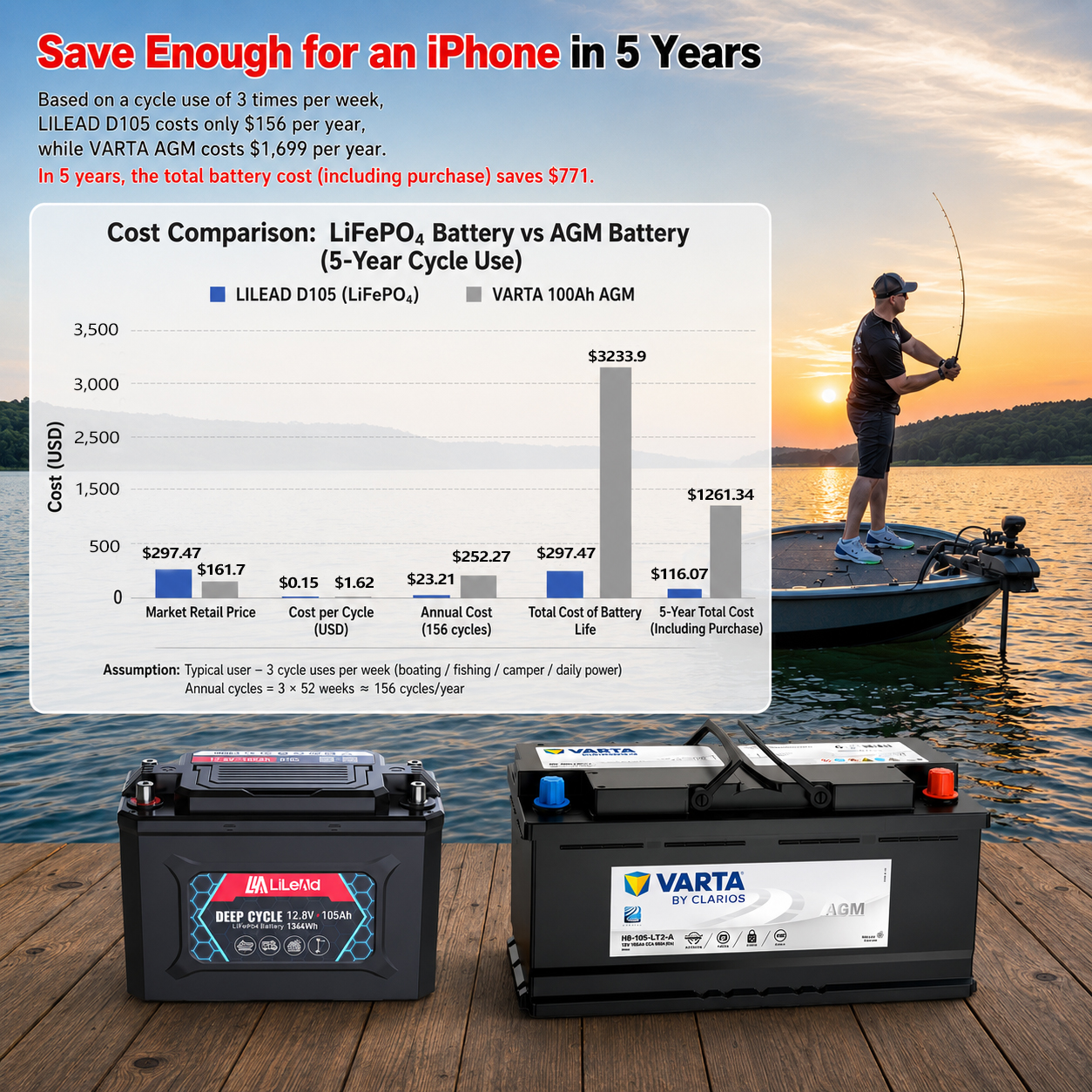
A typical AGM lead acid only lasts around 100 full depth discharge cycles. The LILEAD D105 lithium battery can hit 2000 full depth cycles, 20 times that of AGM lead acid.
Cost breakdown: For the VARTA AGM battery, it costs 150 USD. Spread that cost over its 100 charge discharge cycles, and that comes out to 1.5 USD for every single cycle. And for the LILEAD D105, it’s priced at 325 US dollars. Divide this across its 2000 cycles, and you’re only looking at roughly 33cents per cycle.
(VARTA AGM:150 ÷ 100 cycles = 1.5USD per cycle
LILEAD D105: 325 ÷ 2000 cycles = 0.33 per cycle)
Per use cost of lithium battery is nearly one fifth of lead acid.
To reach 2000 cycles total: You would need 20 pieces of AGM lead acid, total cost 1500USD. Or just one LILEAD D105, costing 325USD. Total long term cost is roughly one fifth of lead acid.
So, back to our opening question: are lithium trolling motor batteries only better because they weigh less? Definitely not.
1/3 weight is only one advantage. You get 2× longer usable runtime, 5× longer full thrust time, 20 times fold cycle life, and 1/5 the per use cost.
So, your boat deserves better power.